




Paintless Dent Repair for Collector Cars Near Piedmont, CA
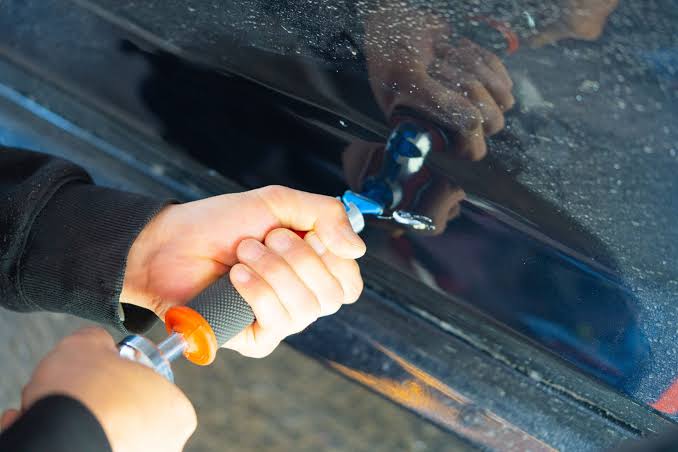
You park your classic carefully, far from the crowd, and still come back to find a fresh ding in the door. For a collector car, even a small dent feels personal.
The good news is that many minor dents can be fixed without sanding, filler, or a single drop of new paint. That’s the promise of paintless dent repair, and it’s one of the smartest ways to protect a collector vehicle.
If you live in Piedmont, Oakland, or anywhere in the East Bay, Cars Dawydiak Body Shop is just across the Bay Bridge in San Francisco. Here’s how the process works and why it suits collector cars so well.
What Is Paintless Dent Repair?
Paintless dent repair, often shortened to PDR, restores a dented panel to its original shape without repainting it. Instead of covering the damage, a technician reshapes the metal itself.
I-CAR, the collision repair industry’s training organization, describes PDR as the art of removing panel dents by pushing or pulling the metal without damaging the finish. The factory paint stays exactly where it is.
Dents PDR Handles Well
PDR works best when the paint surface is unbroken. Good candidates usually include:
- Door dings from parking lots and tight garages
- Small creases along doors and fenders
- Light hail damage
- Minor dents from stray shopping carts or careless car doors
When PDR Isn’t the Right Fit
Some damage needs traditional bodywork instead. Cracked or chipped paint, sharp creases, and dents sitting right on a body line can be harder to fix this way.
A careful inspection tells you which approach fits your car. An honest shop will say so when PDR isn’t the answer.
How the PDR Process Works
PDR looks simple from the outside, but it takes skill, patience, and the right tools. Most repairs follow the same basic steps.
- Assessing the Damage
The technician studies the dent under bright, angled light. This shows the dent’s true depth, size, and shape, and it confirms the paint hasn’t cracked.
- Gaining Access
Next, the technician finds a way to reach the back of the panel. That might mean working through an existing opening or carefully removing a trim piece or interior panel.
- Pushing or Pulling the Metal
Using specialized rods and tools, the technician makes many small, controlled pushes from behind. Each one moves the metal a tiny amount back toward its original shape.
When the back of a panel can’t be reached, glue-pull tools can lift the dent from the outside. According to I-CAR, this method doesn’t require removing coatings such as paint and E-coat.
- Tapping Down the High Spots
As the dent rises, small high spots can form around its edges. The technician taps these down gently so the panel ends up smooth and level.
- Final Inspection
Finally, the repair gets checked again under light from several angles. The goal is a panel that looks like the dent never happened.
Why PDR Is Ideal for Collector Cars
For a daily driver, a quick repaint is usually fine. For a collector car, the paint can be part of the car’s story and part of its value.
It Protects Original Paint
Original factory paint is something many collectors care about deeply. Once a panel is repainted, that originality can’t be brought back.
PDR leaves the factory finish in place. For cars where originality matters, that can be a big deal at resale or on the show field.
It Avoids Filler and Color-Matching Problems
Traditional dent repair often means body filler, primer, and new paint blended into the old. Matching aged or rare colors is hard, and small differences can show up in sunlight.
PDR skips those steps entirely. There’s no new paint to match, so there’s nothing to fade differently over time.
It Leaves Protective Layers Alone
I-CAR notes that glue-pull repair doesn’t damage the back side of the repair area. That means corrosion protection inside the panel stays undisturbed.
It’s Often Faster
Without paint booths or curing times, many PDR repairs move along quickly. Your car spends less time in the shop and more time where it belongs.
What to Look for in a PDR Shop
Not every body shop is the right place for a collector car. Before you hand over the keys, ask a few questions:
- Does the shop work on high-end and specialty vehicles?
- Will a technician inspect the dent in person before quoting?
- Will they tell you honestly if PDR isn’t the best option?
- Do they hold manufacturer certifications for the brands they repair?
Why Piedmont Collectors Choose Cars Dawydiak
Cars Dawydiak Body Shop is built around what we call our freakish attention to detail. Founder Walter Dawydiak has spent decades focused on the details of every repair.
Our shop offers paintless dent repair alongside dent removal, resurfacing, painting, and body panel replacement. We hold multiple manufacturer certifications for structural and aluminum repair.
We’re also OEM certified for many of the brands we specialize in, including:
- Porsche, Pagani, and Corvette
- Ferrari, Maserati, and Alfa Romeo
- Aston Martin and Lotus
- Bentley and Lamborghini
- Jaguar, Land Rover, and Range Rover
- Mercedes-Benz and BMW
An Easy Drive From Piedmont
Getting here from Piedmont is simple. Hop on I-580 toward the Bay Bridge, cross into San Francisco, and you’re a short drive from our shop at 1540 Bush Street.
We welcome collectors from across the East Bay, including:
- Piedmont and Montclair
- Rockridge and Oakland Hills
- Berkeley and Alameda
- Orinda and Lafayette
Schedule Your Paintless Dent Repair Consultation
A small dent doesn’t have to mean losing your car’s original finish. The sooner you have it inspected, the easier it is to plan the right repair.
You can also send our team a quick note about your collector car, and we’ll help you decide whether PDR is the right fit.